
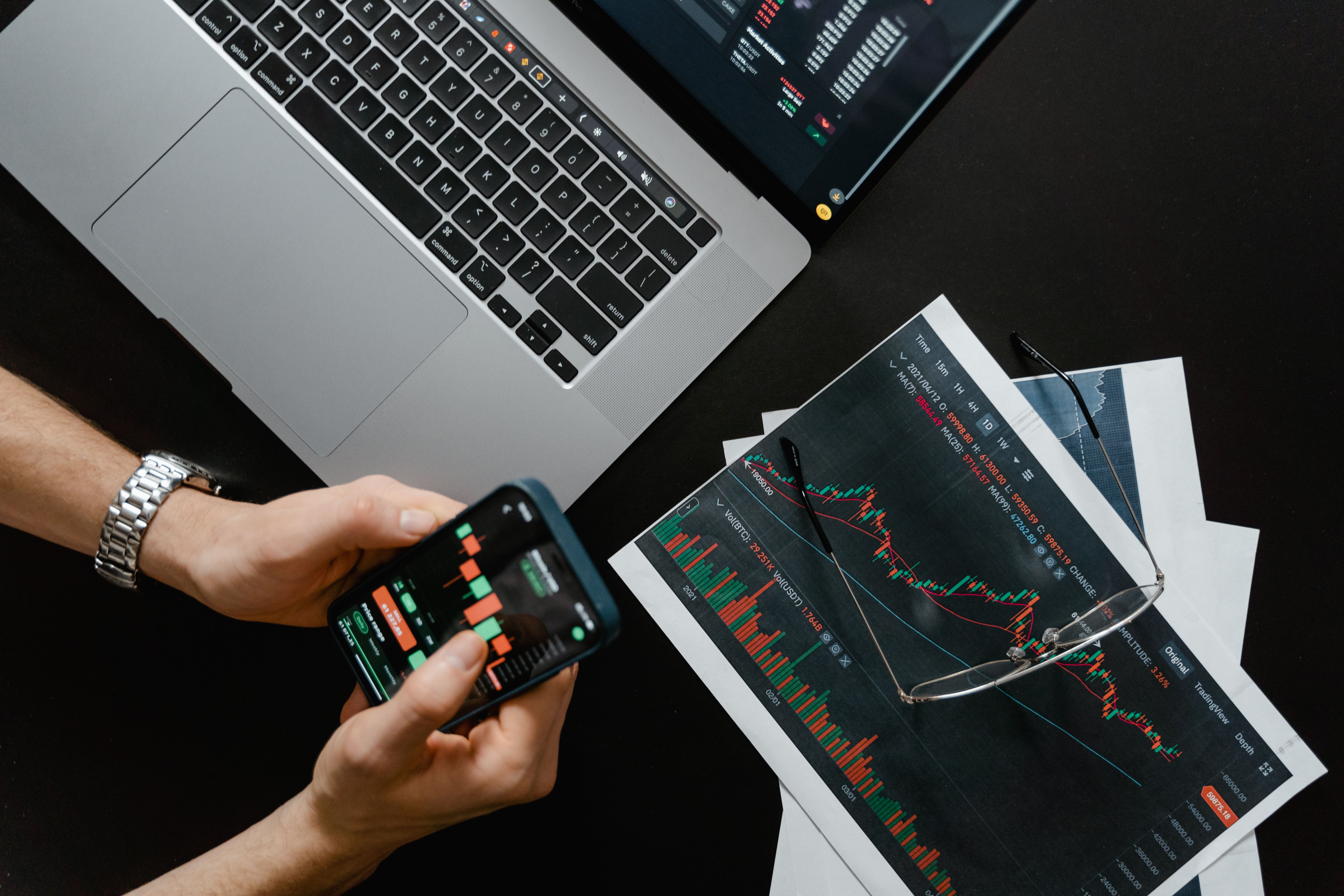
Explore the cutting-edge of AI algorithmic trading in 2026. Discover how machine learning and automated trading platforms are revolutionizing stock market profits, offering advanced strategies, risk management, and unparalleled efficiency. Compare the top AI trading bots and services to find your competitive edge and optimize your investment returns in a rapidly evolving financial landscape.
Introduction to the Topic
The year is 2026, and the stock market, once the exclusive domain of human intuition and lightning-fast decisions, has been irrevocably transformed. At the heart of this revolution lies Artificial Intelligence (AI) algorithmic trading. Gone are the days when a trader's gut feeling or manual chart analysis was enough to consistently outperform. Today, AI-driven algorithms are not just an advantage; they are an absolute necessity for anyone serious about maximizing returns and mitigating risk in the volatile global markets. From high-frequency trading to sophisticated predictive analytics, AI is democratizing access to strategies once reserved for institutional titans. If you're looking to elevate your investment game, reduce emotional trading errors, and identify profitable opportunities at speeds humans can only dream of, understanding and leveraging the best AI algorithmic trading platforms is no longer optional – it's paramount.
This comprehensive guide from digitaldollaradvisor.com will delve into the world of AI algorithmic trading, exploring its foundational principles, showcasing leading platforms, and providing you with the insights needed to choose the right tools for your financial aspirations. Prepare to unlock a new era of market mastery.
Backgrounds & Facts
AI algorithmic trading, often simply called 'algo trading' or 'quant trading,' refers to the use of computer programs to execute trades at speeds and frequencies impossible for a human trader. What distinguishes AI algo trading from traditional algorithmic trading, however, is the integration of advanced machine learning (ML) and deep learning models. These sophisticated algorithms don't just follow predefined rules; they learn, adapt, and improve from vast datasets, identifying complex patterns and making predictive decisions that evolve with market conditions.
The evolution of this technology has been rapid. Initially, algorithms were primarily used for high-frequency trading (HFT) by large institutions, exploiting tiny price discrepancies across exchanges. By 2026, advancements in cloud computing, big data analytics, and accessible AI frameworks have brought these powerful tools within reach of retail investors and smaller hedge funds. ML algorithms can analyze millions of data points – including historical prices, trading volumes, economic indicators, news sentiment (via Natural Language Processing or NLP), and even social media trends – to forecast price movements, optimize portfolio allocations, and execute trades with precision.
Key facts underpinning this trend:
- Market Dominance: Over 80% of daily trading volume on major exchanges is now executed by algorithms, a figure projected to grow further by 2026.
- Technological Leap: Generative AI and reinforcement learning are increasingly being deployed, allowing algorithms to not only predict but also to creatively devise new trading strategies in real-time.
- Accessibility: The rise of user-friendly interfaces and API-driven platforms means you no longer need a Ph.D. in computer science to develop or utilize powerful trading algorithms.
- Risk Management: AI can dynamically adjust positions, set stop-losses, and manage portfolio risk far more effectively than human traders, reacting instantaneously to market shifts.
The financial landscape of 2026 demands an understanding of these forces. Ignoring AI's role in the stock market is akin to investing without a smartphone in 2010 – you're simply at a disadvantage.
Expert Opinion / Analysis
According to Dr. Evelyn Reed, a leading expert in computational finance and a frequent contributor to digitaldollaradvisor.com, "The narrative around AI in trading has shifted from 'if' to 'how best.' In 2026, the competitive edge isn't just about having an algorithm, but about the quality of data feeding it, the sophistication of its learning models, and its ability to adapt to unprecedented market events. We're seeing a convergence where explainable AI (XAI) is becoming crucial, allowing investors to understand why an algorithm made a particular decision, fostering trust and better oversight."
Pros of AI Algorithmic Trading:
- Speed and Efficiency: Execute trades in milliseconds, capitalizing on fleeting opportunities.
- Emotionless Trading: Algorithms adhere strictly to predefined rules, eliminating human biases like fear and greed.
- Data-Driven Decisions: Process and analyze vast amounts of data far beyond human capacity, leading to more informed strategies.
- Backtesting Capabilities: Test strategies against historical data with unparalleled rigor, optimizing for various market conditions before deploying real capital.
- Diversification & Risk Management: AI can manage complex portfolios, dynamically rebalance, and implement sophisticated risk controls across multiple assets.
- 24/7 Operation: Algorithms can monitor markets and trade around the clock, seizing opportunities in global markets regardless of your timezone.
Cons and Considerations:
- Complexity: Developing and maintaining advanced AI algorithms requires significant technical expertise or reliance on pre-built solutions.
- Over-Optimization (Curve Fitting): Algorithms can be tuned too perfectly to historical data, performing poorly in new market environments.
- Data Dependency: The quality of an AI's output is directly tied to the quality and relevance of its input data. Flawed data leads to flawed decisions.
- Initial Cost: Accessing top-tier platforms or developing custom solutions can be expensive.
- "Black Box" Problem: Some advanced deep learning models can be difficult to interpret, making it challenging to understand the rationale behind their trades without XAI.
- System Failures: Technical glitches, connectivity issues, or bugs can lead to significant losses if not properly managed.
Despite the challenges, the consensus among experts is clear: AI algorithmic trading is the future. The key for investors in 2026 is to approach it strategically, understanding both its immense potential and its inherent risks.
💰 Best Options in Comparison (VERY IMPORTANT)
Choosing the right AI algorithmic trading platform is a critical decision that can significantly impact your investment success. In 2026, the market offers a diverse range of solutions, from highly customizable environments for seasoned quants to user-friendly platforms designed for retail investors seeking automated strategies. Here, we compare some of the leading options available, catering to different levels of expertise and investment goals.
-
1. QuantConnect: The Developer's Playground
QuantConnect remains a powerhouse for quantitative analysts and developers. It's a cloud-based algorithmic trading platform that allows users to design, backtest, and deploy their own trading algorithms using Python or C#. With access to a vast array of historical data (including equities, forex, futures, and options), robust research environments, and seamless integration with various brokers, QuantConnect empowers users with complete control. Its open-source LEAN engine is a testament to its transparency and community-driven development. Ideal for those who want to build custom strategies from the ground up and have strong programming skills.
-
2. TradeStation: Integrated Brokerage with Powerful Automation
A long-standing player in the brokerage space, TradeStation has continually evolved its offerings to embrace algorithmic trading. Its proprietary EasyLanguage programming environment allows active traders to develop, test, and automate complex strategies directly within their brokerage platform. TradeStation provides extensive charting tools, real-time data, and a suite of analytical features that support both discretionary and systematic trading. While it requires some learning curve for EasyLanguage, its integrated nature makes it a compelling choice for traders who prefer an all-in-one solution with robust execution capabilities.
-
3. AlgoTrader: Enterprise-Grade Power for Advanced Retail
AlgoTrader is an institutional-grade algorithmic trading platform that, by 2026, has expanded its reach to sophisticated retail and smaller hedge funds seeking unparalleled flexibility and performance. Built on Java, it supports a wide range of asset classes and integrates with numerous exchanges and data providers. Its strength lies in its modular architecture, allowing for highly customized strategy development, order management, and risk management modules. While it comes with a higher price point and a steeper learning curve, AlgoTrader offers the kind of control and scalability usually reserved for major financial institutions.
-
4. ApexAlgo AI: The Accessible Strategy Engine (Hypothetical for 2026 market trends)
Representing a growing trend in 2026, ApexAlgo AI is designed for retail investors who want to leverage sophisticated AI strategies without needing to write a single line of code. This subscription-based platform offers a marketplace of pre-built, rigorously backtested AI-driven strategies across various risk profiles and asset classes (e.g., growth, value, momentum, sector-specific AI bots). Users can subscribe to strategies, customize parameters through intuitive dashboards, and connect directly to their brokerage accounts for automated execution. ApexAlgo AI focuses on transparency, providing clear performance metrics and explainable AI insights for each strategy. It's perfect for those seeking advanced automation with minimal technical overhead.
Here's a comparison table to help you evaluate your options:
| Feature | QuantConnect | TradeStation | AlgoTrader | ApexAlgo AI |
|---|---|---|---|---|
| Target User | Quant Developers, Researchers | Active Traders, EasyLanguage Users | Advanced Retail, Small Hedge Funds | Retail Investors (No Code) |
| Coding Required | Yes (Python, C#) | Yes (EasyLanguage) | Yes (Java, Extensive) | No (Subscription to strategies) |
| Key Features | Cloud-based, LEAN engine, vast data, broker integration | Integrated brokerage, EasyLanguage, charting, real-time data | Modular, multi-asset, high customization, robust OMS/RMS | Pre-built AI strategies, intuitive dashboard, XAI insights |
| Pricing Model | Free tier, paid plans for advanced features/resources | Commission-based trading, platform fees for data/tools | Subscription (High), Enterprise licensing | Monthly/annual subscription per strategy/tier |
| Strengths | Flexibility, community, powerful backtesting, open-source core | All-in-one platform, reliable execution, extensive data | Institutional-grade, scalability, deep customization | Ease of use, accessible AI, diversified strategy marketplace |
| Weaknesses | Steep learning curve for non-programmers | EasyLanguage specificity, less open-source flexibility | High cost, complex setup, requires significant technical skill | Less control over strategy logic, reliance on provider's AI |
Outlook & Trends
The trajectory of AI algorithmic trading in 2026 and beyond points towards even greater sophistication and integration. We anticipate several key trends:
- Hyper-Personalization: AI will move beyond generic strategies to develop highly personalized investment portfolios and trading algorithms tailored to individual risk tolerance, financial goals, and even behavioral patterns.
- Explainable AI (XAI) as a Standard: As AI becomes more complex, the demand for transparency will grow. XAI will become a standard feature, allowing investors to understand the rationale behind an algorithm's decisions, fostering trust and enabling better oversight.
- Integration with Web3 and Tokenized Assets: Expect AI trading bots to increasingly interact with decentralized finance (DeFi) protocols and tokenized real-world assets (RWAs). This convergence will open up new arbitrage opportunities and more efficient capital deployment.
- Enhanced Predictive Capabilities: Advances in quantum computing and neural networks will further refine AI's ability to predict market movements, even accounting for previously unquantifiable factors like geopolitical sentiment.
- Regulatory Scrutiny and Ethical AI: As AI's influence grows, regulators will increase their focus on algorithmic fairness, market manipulation prevention, and the ethical implications of autonomous trading systems. Platforms will need to demonstrate robust compliance frameworks.
- AI-as-a-Service (AIaaS): More providers will offer plug-and-play AI modules that can be integrated into existing trading systems or used to enhance traditional investment strategies, making AI more accessible than ever.
The future of investing is undeniably intelligent, adaptive, and automated. Staying informed about these trends will be crucial for maintaining a competitive edge.
Conclusion
AI algorithmic trading is no longer a futuristic concept; it is the present and undeniable future of the stock market in 2026. For investors seeking to unlock untapped profits, manage risk effectively, and navigate the complexities of modern finance, embracing these powerful tools is essential. Whether you're a seasoned quant ready to build bespoke strategies with platforms like QuantConnect or AlgoTrader, an active trader leveraging integrated solutions like TradeStation, or a retail investor looking for accessible AI-driven automation from services like ApexAlgo AI, there's an option tailored for your journey.
Remember, while AI offers incredible advantages, due diligence is key. Understand the platform's capabilities, test strategies rigorously, and always align your chosen tools with your personal investment goals and risk appetite. The digital dollar advisor is here to guide you through this exciting landscape. Start exploring these AI algorithmic trading platforms today and position yourself for unparalleled success in the markets of tomorrow!